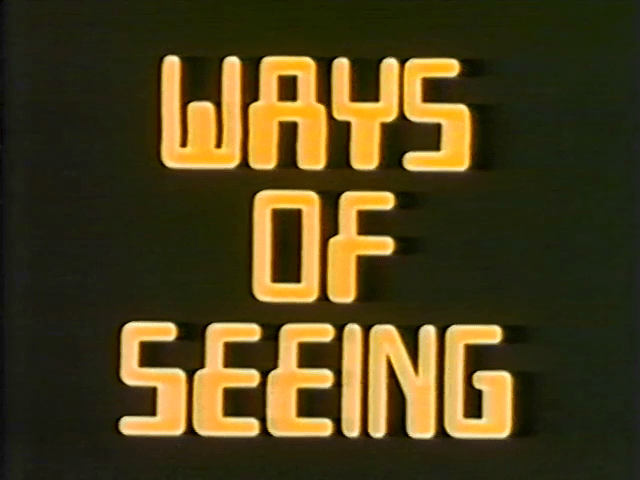
Inspired by John Berger’s “Ways of Seeing”
In a world flooded with images—copies, reposts, remixes, screenshots—we rarely stop to ask: What is the value of the original? Or better yet, what is the value of a replica?
Reading John Berger’s Ways of Seeing this year shifted how I think about the relationship between image and meaning. Berger argues that “the way we see things is affected by what we know or what we believe.” It sounds simple, but the implications are profound—especially when we consider how images are endlessly reproduced in the digital age.
Reproduction Changes Everything
Berger expands on Walter Benjamin’s notion of the aura—the unique, irreplaceable presence of an artwork in time and space. A painting in a museum carries with it ritual, history, and status. But what happens when that same painting is reproduced in a textbook, a postcard, or an Instagram story?
It changes.
The context shifts.
The meaning transforms.
A replica democratizes access—but also detaches the artwork from its original setting and significance.
In Berger’s words:
“The meaning of an image can be changed according to what you see beside it or what comes after it.”
So… Does a Replica Have Less Value?
That depends on how we define value.
If value means authenticity, the replica falls short.
If value means access, communication, or influence, then replicas might be even more powerful than the original.
In design, reproduction is not an afterthought—it is the point. We don’t create one version of a poster, publication, or website. We create systems meant to be printed, reposted, resized, reinterpreted. Our work lives through its iterations.
So maybe the question isn’t about whether the original or the copy is more valuable, but about how the act of copying reshapes what we see and how we understand it.
The Designer’s Dilemma
Designers are often taught to pursue originality—to create something new, something unseen. But design is inherently referential. We work with grids, typefaces, templates, systems. Every choice we make is part of a larger visual lineage.
To design is to work within structures while also questioning them.
We rely on what came before, but reinterpret it for a new context. We remix, we respond, we reframe. The value lies not just in originality, but in awareness—of meaning, of medium, of message.
Final Thought
Reading Ways of Seeing reminded me that perception is never neutral. Every image, whether original or reproduced, carries layers of meaning shaped by context, culture, and intention.
A replica is not a lesser version—it’s a new encounter. Sometimes, it even speaks louder than the original.
As artists and designers, we live in a world of replicas. But it’s up to us to assign meaning, to think critically about what we create, and to question how we see.
The value of a replica is not in its fidelity—but in its possibility.
 martasjournal
Leave a comment